
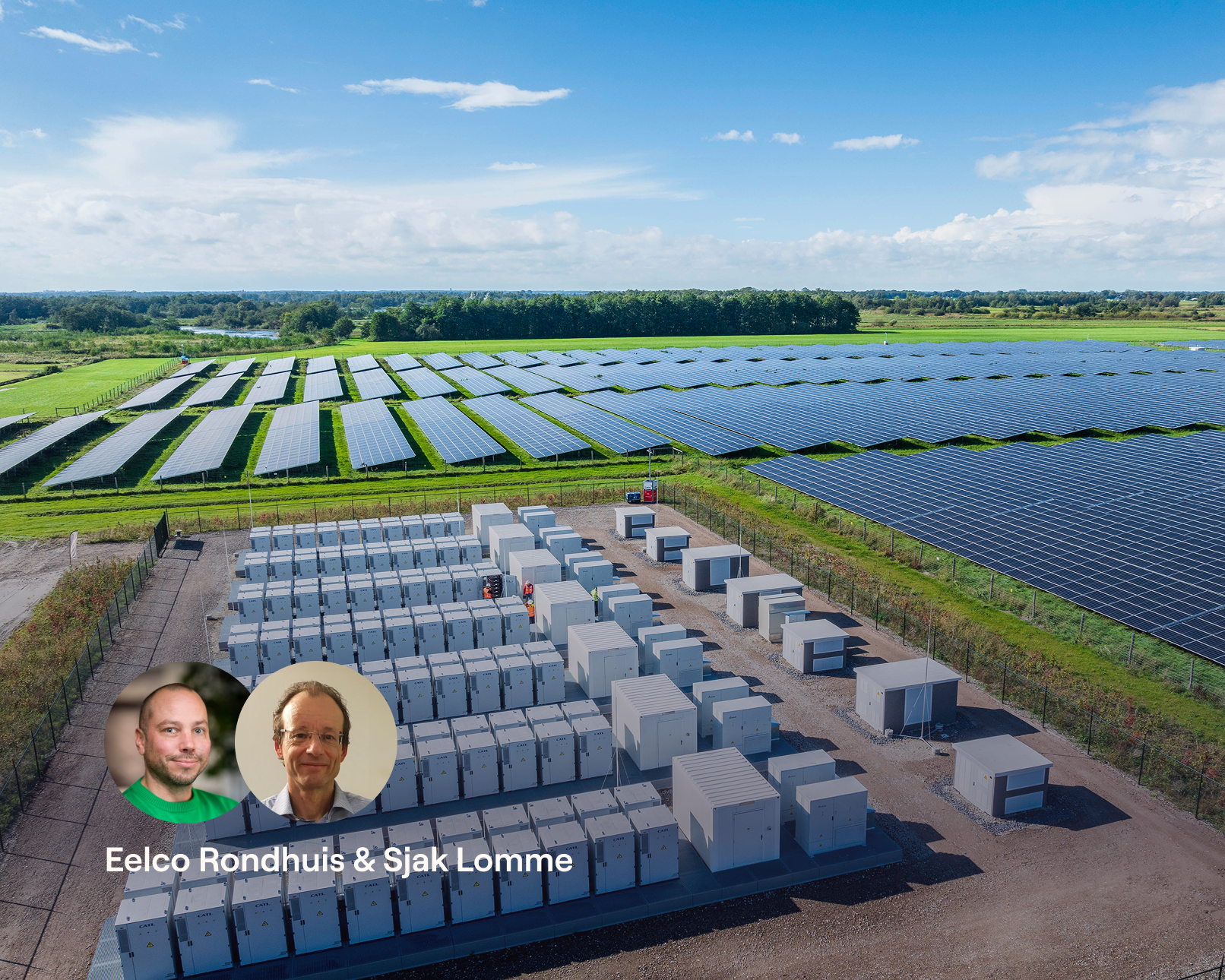
Due to the rising number of hours with negative electricity prices, solar parks are increasingly facing reduced revenues. This puts pressure on the business case for renewable energy projects. In the Netherlands, the SDE++ is a government subsidy scheme that supports the development of sustainable energy by covering the financial gap between renewable and conventional energy sources. A recent consultation on the future of the scheme explores possible solutions, but one promising option remains underexposed: delayed grid feed-in through battery storage.
By temporarily storing generated electricity and feeding it into the grid only when prices turn positive again, grid capacity can be used more efficiently while production still qualifies for subsidies. Especially when batteries are connected to existing solar park grid connections. This leads to both societal and financial benefits. Batteries also become more attractive thanks to savings on grid transport costs and a stronger business case, particularly for high and medium-voltage connections.
This approach contributes to making existing renewable energy projects more future-proof and encourages the development of battery storage. To meet climate targets and create space for additional renewable generation, it is therefore essential that the SDE++ scheme evolves in line with this new reality.